How Aesop turned into a billion-dollar brand

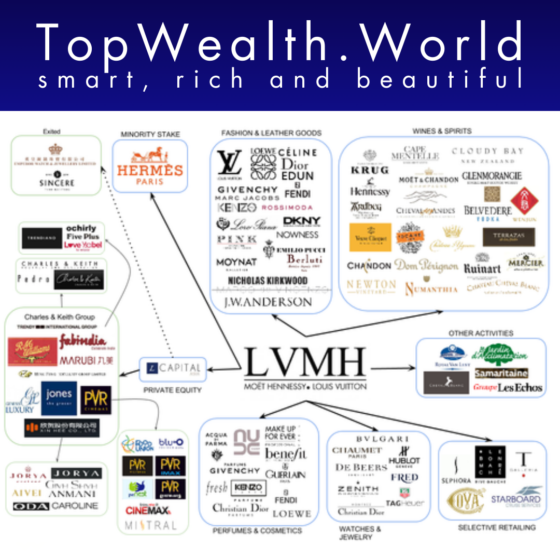
Iconic Melbourne-founded skincare brand Aesop has been valued at $2.9 billion, a rating that would “blow other Australian luxury businesses out of the geranium leaf-scented water.” Natura & Co, the Brazilian cosmetics giant that bought Aesop in 2016, is discussing a potential sale with LVMH and L’Oreal, and also exploring an IPO. A sale in...

Membership Required

You must be a member to access this content.

View Membership Levels

Already a member? Log in here

Brunello Cucinelli – king of cashmere

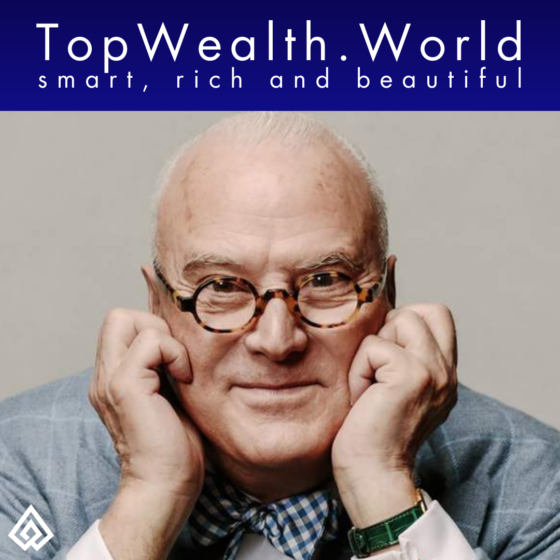
Dubbed the “king of cashmere” by The New Yorker, Brunello Cucinelli is the founder of the eponymously named fashion house that is well-known for making luxury cashmere sweaters (and more than $450 million a year in revenues). He started his company in 1978, and, now he lives in Solemeo, Italy, with his wife and two children.

This interview with Brunello Cucinelli was taken by journalist, IT expert, and partner at the venture fund True Ventures, Om Malik, several years ago, but the text continues to be revisited in the technology and venture community, and last week there was a new surge of interest in the interview. People are tired of the endless race for business growth, fantastic profits, and new investments, and they want to hear and see advice on how to live differently.

If you don’t have time, you can quickly go through the main practical takeaways from the interview below, but the entire interview provides food for thought.

Summary: Entrepreneurial Advice on Productivity

Brunello Cucinelli manages his business in a unique way, spending his time implementing Italian craftsmanship traditions into the business, and the company demonstrates rapid growth. Cucinelli has figured out how to overcome the constant need to check overflowing mailboxes, work around the clock, and be a slave to the system. His approach to business is different from the avalanche of smartphone notifications that Silicon Valley is used to, and there is much to learn from this man.

Work diligently during the day, then rest. “In our company, you start work at 8 am, and at 5:30 pm, working is already prohibited. You may think you worked one hour less, but the next morning, your level of creativity breaks through the sky.”

Focus on quality, not quantity. “We need to rethink the very concept of quality of work. Do you think you are the same in the first five hours of the day as in the last five hours? No. You get tired, and if you are tired, you stop listening, and your decisions become risky.”

Learn the art of doing nothing skillfully. Cucinelli calls it “otium,” a Latin word that means “doing nothing.” He says, “On a winter Sunday, I can spend six hours sitting by the fireplace, just looking at the fire and reflecting. In the evening, I am intoxicated with beautiful thoughts. My wife asks me, ‘What are you looking at?’ I reply, ‘The fire.’ Sometimes you need to take a step back.”

But don’t waste time idly. “I don’t want to see jokes or anecdotes in my email during the day,” he says.

Believe in every person. “If you have a thousand people, you have a thousand geniuses. They are just different types and degrees of genius.”

Your phone is not a part of your body. “No one is allowed to bring a phone into the conference room. You must remember everything by heart. You must know your entire area of responsibility with an error margin of 1 to 2 percent.” If you send Cucinelli an SMS, he won’t read it until 6 in the evening.

Don’t send emails when you can talk. “Just get up, go to your neighbor, and ask them personally. Firstly, you look into their eyes. You feel the smell, presence. Maybe I will take the opportunity to ask about your family. Don’t you feel better than if you had written a letter? Maybe I’ll even smile, and you’ll feel even better.”

And don’t even think about sending an email to more than two people. “Why should one letter be read by ten people if these ten people are not interested in this specific matter?”

Don’t forget about dignity. “Before going public, I asked the shareholders: ‘Do you want a company that grows very fast and makes a lot of money? Don’t invest. Or do you want a company with healthy growth? One that allows suppliers to grow with it, as well as artisans and employees?'”

Take care of your body and soul. “There are three things that you cannot buy. Physical shape: you need to keep yourself in shape, whether you are rich or not. Diet: you cannot pay someone to be on a diet for you… And your soul. No one can heal your soul except yourself. Let’s try to take care of it during work.”

Interview

In all candidness, I shouldn’t have been in Solomeo. I don’t write for a big fashion magazine. I have no credibility in Brunello Cucinelli’s world. But after a friend heard me wax eloquent about well-made cashmere sweaters for nearly an hour, he suggested that I should perhaps meet this guy in Italy. An email introduction led to an open invitation to come visit his hamlet whenever I was in Italy. Last April, I found myself in Perugia for the Journalism Festival and chanced on a visit. Brunello’s response? Come right over.

The self-made billionaire greeted me at the door as if I was his long-lost friend. I felt as if I had known him all of my life, just hadn’t met him. I had bought two of his sweaters almost seven years ago, when I had lost a lot of weight (which I have since regained), but his clothes aren’t really part of my wardrobe. And yet I have admired them, as well as his stores and his ethics.

For example, he gives 20 percent of his company’s profits to his charitable foundation in the name of “human dignity” and pays his workers wages that are 20 percent higher than the industry standard, mostly because it allows his company to encourage and continue the Italian craftsman traditions. Cucinelli also pays for an artisan’s school in Solemeo: Young people are free to work either at his company or for another Italian company. The on-campus cafe is way more beautiful than Google Cafe or Facebook’s facilities. And the pasta is really heavenly.

The company, which trades on the Milan Stock Exchange, is doing well: about 356 million euros in revenues in 2014. Brunello is part businessman, part philosopher and part monk. He is not Jeff Bezos or Larry Page. He certainly isn’t chief executive of an oil company. He is the anti-LVMH, and that is what makes him interesting.

We were supposed to meet for 30 minutes but ended up spending a few hours talking about everything from Marcus Aurelius to Barack Obama to Steve Jobs to his father, a farmer. Here is a snapshot of our rambling two-hour conversation, facilitated by an Italian translator. There are so many lessons here for founders, especially the importance of giving back.


Om Malik: I’ve been reading about you, and I have been fascinated by your progress and more importantly how you have conducted your business. Where did you find the inspiration to follow this path

Brunello Cucinelli: From the teary eyes of my father. When we were living in the countryside, the atmosphere, the ambiance — life was good. We were just farmers, nothing special. Then he went to work in a factory. He was being humiliated and offended, and he was doing a hard job. He would not complain about the hardship or the tiny wages he received, but what he did say was, “What have I done evil to God to be subject to such humiliation?”

Basically, what is human dignity made of? If we work together, say, and, even with one look, I make you understand that you are worth nothing and I look down on you, I have killed you. But if I give you regards and respect — out of esteem, responsibility is spawned. Then out of responsibility comes creativity, because every human being has an amount of genius in them. Man needs dignity even more than he needs bread.

[In the past, people] didn’t know anything about their employer. My father or my brother didn’t know if their employer had a villa on the sea. Whereas with Google Maps, I can see where your house is. That’s where the world is becoming new. Mankind is becoming more ethical, but it is not happening because man has decided to become better than he was 100 years ago. It’s because we know we live in a glass house where everybody can see.

In order to be credible, you must be authentic and true. Twenty years ago, something might be written about you in a newspaper. Then this newspaper would be scrapped, and that would be it. But now your statement stays [online] for the next 20 to 50 years — who knows how long for. To be credible, you must be consistent in the way you behave. Someone can say to you, “Listen, two years ago, you said something different.” In a split second, they know. That’s where lies that wonderful future for mankind.

BrunelloCucinelli18

Radical Transparency

Om: So you are in favor of radical transparency?

Brunello: Yes, I am in favor of that, because that’s the way to become authentic and credible.

Om: Authentic and credible and open are wonderful ideas, but I wonder how you feel it all fits into today’s reality. Now every person edits the story they tell about themselves, carefully ensuring what the world looks at — whether it’s over Instagram, Twitter or Facebook.

Brunello: I’d like to focus on the positive. The positive side is that you must be credible. Because everybody knows the problem that I’m concerned about, the dangerous is what you’ve just said, Facebook and all that.

Like [Greek philosopher] Heraclitus used to say, Polemos is the father and master of mankind. Without Polemos, there is no discussion, right? It’s difficult to have a discussion, because nowadays human beings walk with a bowed head, looking down [at their phones]. Yesterday morning, a girl bumped her head in my face because she was not looking up.

I want to take a step backward. Who remembers the last email they sent yesterday? No one. Or the last text message. Emperor Hadrian used to say, The daily business, the daily life, the daily chores, kills the human being. I’m not interested in daily chores. We have now swapped information for knowledge, which is not the same thing. I do not want to know. I’m not online. I don’t even have a computer.

I am a great supporter of memory. If I remember things, I do not need to go back and check and revise. In this company, you cannot send emails after 5:30 PM, when the company closes for the evening. The day after, when you turn up for work, what are you like? You are a still person. You are better.

I do not want to be liable for intruding into your private life. Saint Benedict said, “You should look after your mind to study every day, then your soul through praise,” which is basically speaking to yourself, praying. “Then work, through work.” But the abbot is the one who basically assigns all the work; he is responsible for you even after your death. I do not want to assign work to you where I feel responsible for ruining or altering your private life.

BrunelloCucinelli6

Taming Technology

Om: How do you reconcile that with a world that is moving constantly and quickly, 24/7?

Brunello: Well, for example, we call our New York office and no one says, “Hi, how are you? How’s your day?” No one. If everything is so short and to the point, how much time is then left for your mind? [It should be the case that] if we need three hours to go deep into things, then we do it.

Om: So you run a business that is across the universe, across the planet, different time zones, different people. Isn’t that more of a 24/7 endeavor?

Brunello: No, it’s not 24/7, because here in the company, you start at 8 AM, and at 5:30 PM you are forbidden to work any further. No emails can be sent to more than two addressees, just one or two. No group mailing. Why must a single email be read by 10 different people, unless it’s the 10 people who are interested in that specific issue? In order to disperse responsibility?

The first time I was in New York, we had a tiny office, and they were emailing across it. I said, “No way. Just get up and go to your neighbor and ask them one thing, in one split second, in person.” First of all, you look me in the eye. You smell me, my presence. Maybe I take the opportunity to ask you about your family. Don’t you feel better than if you get an email? Maybe I smile and you feel even better.

The other day, I was writing some things that were important to me, and a message arrived. Who is able not to check the message? No one. Everybody is tempted. You go there for 30 seconds, then your mind is there, even though you were focused on what you were doing previously.

Here, no meetings with mobile phones. No one is allowed to bring them into the meeting room. You must look me in the eye. You must know things by heart. You must know all of your business with a 1 to 2 percent error rate. It is also training for your mind. It is also a question of respect, because I have never called someone on a Saturday or a Sunday. No one is allowed to do so. We must discover this, because if individuals rest properly, then it is better.

Do you know the word otium in Latin, meaning, “doing nothing”? The Roman people were all laid back. In all the pictures, they were all laying around. They were doing nothing, just staring. In the winter on a Sunday afternoon, I can spend six hours in front of the fireplace, just looking at the flames and thinking. In the evening, I’m drunk with beautiful thoughts. My wife says to me, “What are you looking at?” I say, “The fire.” We have to take a step backward.

Many years ago, I witnessed something in America. I was there for Thanksgiving. When it was time for lunch, my friend would get a dish and bring it to the children, who were placed in front of the television. They were absorbed by the television. I said to my wife, it’s something I can’t cope with. I’ve always said we must be on the cutting edge with technology. But your life shouldn’t change as a consequence.

Slaves to technology?

Om: Is it fair to say that you believe in technology as a tool and not in us becoming slaves to it?

Brunello: Yes. I have a phone. I think I receive 10 calls a day, because they know that I only want to receive the important ones. In Hong Kong, I walked out of the subway and someone was saying on the loud speaker, “Be careful, there’s a wall.” It’s basically what happened to the lady yesterday morning. We must really manage this kind of reality. We must rule it somehow.

Om: What’s the correlation? All these people you are quoting are very interesting, but why mention them? Also how are they correlated to all these people whose photos you have on the wall here?

Brunello: Those are the ancient thinkers, philosophers: Socrates, Confucius, Constantine, Palladio. These people are the contemporary figures that left me with a different view on the world. Dostoyevsky, Gandhi, Martin Luther King Jr., Kafka, Kennedy and the Pope. At the end of the day, all these great people, what do they focus on? Human dignity. They all talk about being custodians in the world. Hadrian, the emperor said, “I feel responsible for the beauty in the world.”

Can I ask you, how old are you? I am 60 myself.

Om: 48.

Brunello: You are not far away from my mindset.

Jean-Jacques Rousseauwas a great enlightened man, but he was the first of the Romantic movement, too. I think that in the last 30 years, we have tried to govern mankind through enlightenment, through the use of reason, our mind. This is no good.

This century is where enlightenment and romanticism must blend. A great idea that is born out of the mind and then goes through the soul — there is no doubt that the outcome is marvelous. If this idea is true, fair, beautiful, there’s no doubt that it is also a good idea. I think this applies to everything.

BrunelloCucinelli19

Om: Agreed.

Brunello: I spend a lot of time in the Italian café, and when we are in the café, what is that? That’s the Polemos I was telling you about. Discussions over time, debate about theology, economics, economy, religion. If we said, “When was Kant born? 1750?” and your mind was working in the meantime. Now, split second, Google it, and you know. There it is.

The mind no longer searches for things. For example, in what years was Marcus Aurelius emperor? When was that battle that we always talk about? What was there in that precise moment? What was going on?

In the past, say we were going to to meet up. I had seen you once before — your face, your body. But I didn’t know what it would be like to meet again. Whereas now I’ve seen you and you’re wearing your bikini. I’ve seen you everywhere. I do not want to deprive you of the surprise of the magic. Because then when you finally show up, you feel the smell of the burnt wood and everything else.

The other night at my place, there were 19 friends who have known one another since birth. We went through childhood, youth, everything together. The other night we were having this beautiful discussion about death. One of them got his phone out and said, “Look at this video.” It was one of those videos about jokes and stuff: funny, of course. Of course, the discussion was interrupted. I said, “Are we crazy? No, there’s no way.” In the end, we never resumed the talk about death.

Then you ask yourself, “How can I govern this? How can I manage it?” No one can actually be so strong that you are thinking, then a bleep comes and you’re not tempted to take a look. I don’t know anybody who can resist that temptation.

Cashmere Chronicles

Om: Can we talk a little bit about you and your career as a businessman?

Brunello: Yes, with pleasure.

Om: You dropped out of engineering school to design cashmere sweaters. What was the attraction to cashmere?

Brunello: I had read Theodore Levitt, the American, who used to say that developed countries were supposed to manufacture special handcrafted goods, because one day, new people would arrive who would make the same things but at a better price. The idea of doing luxury, “made in Italy” has always been with me.

Why cashmere? Because I was using something that theoretically never goes to waste. You never throw away a cashmere pullover. The idea of manufacturing something that you never scrap, you never throw away — I liked it very much. Mind you, I had no money in my pocket at that time. Absolutely nothing.

I had this idea of building a company with one or two people and giving dignity to work.

Om: Now we have a world that is changing. The idea of “brand” is kind of amorphous, and you don’t really know who stands behind that brand. I wonder if you have any thoughts about it.

Brunello: I wanted the brand to have my face. I wanted the product to convey the culture, life, lifestyle, dignity of work. We are a listed company, and I wanted to manufacture a product with dignity. I wanted a profit with dignity. Because the press all talk about the moral ethics of profit. Why can’t we have a dignified profit then?

Would you buy something from someone if you knew that the person, by making this product, has harmed or damaged mankind? No, you would not buy it. You wouldn’t even buy it if you knew that the company had staggering profits. Our cashmere blazer costs $3,000 retail, but the profit must be dignified. It needs to respect the raw material producer, then the artisans, then those working for the company. The consumer also needs to be respected. Everything must be balanced.

We need a new form of capitalism, a contemporary form of capitalism. I would like to add “humanistic” to that equation.

Don’t you feel that over the last two or three years? Don’t you smell it? There is an awareness raising, a civil, ethical point of view. The idea of community, dignity. Yes, it’s a strong sensation.

BrunelloCucinelli10

Om: I refuse to buy anything made in China, unless I know who makes it, and also I don’t buy anything which comes from fashion conglomerates. I like to pay for quality. The only challenge I feel is that for our approach to work, there has to be a certain amount of money, a certain amount of comfort in life. Without it, some people still have to work with the industrial society we are now in.

Brunello: My daughter refused to buy a pair of trousers for €19. Beautiful trousers. I said, “Why didn’t you buy them?” She said, “How much money do they think the worker actually made or was paid for that?” I think that if you make a product, you have to sell in that specific market. In India, it has a price; in America, it has another price. I’m fine with that.

There are some companies that give a lot of their money to charity. I’m not interested in that. Because first of all I want to see how they make their profit in the process. It is meaningless that they make a huge profit and then do charity.

BrunelloCucinelli16

Rise of the Internet Brands

Om: There is a big boom in internet-based fashion brands. Do you think that trend has the ability to influence the world of fashion and clothing?

Brunello: Yes, absolutely.

There’s luxury, absolute luxury, aspirational luxury and accessible luxury. Luxury is a handcrafted good or a place that is beautiful, well-made, exclusive. It must be exclusive; otherwise it’s not luxury. It’s nearly always something beautiful, well-made, true, and also useful and fair.

But what is this thing, “accessible luxury”? The two words don’t go together. Absolute luxury must be exclusive too. Everything must be balanced. You made it. The raw material supplier, did they earn the fair amount? Good. Do the people who work for the company earn fair wages? Yes. Has the company made a fair profit or an excessive profit?

I think this jumper is three or four years old. Ten years old. Five years old. Three years. Even if you stop wearing it 10 years later, it should still be there. At the end of the day, most of all, there is quality, a high degree of workmanship.

We went public, and we have more than 50 percent American investors as shareholders. Before going public, I said to them, “Are you looking for a company that grows very fast, that makes profits that are too high, in our view, quick profits? Do not invest in our company. Do you want a company that grows in a gracious way? That allows suppliers to grow alongside it, so that your artisans can grow as well as the company’s staff?”

You buy this product and you feel better, you feel at peace, because you bought a product that, although very expensive, there is work and respect for the work that goes into the product. I do not buy a specific product if I know you have made preposterous amounts of profit out of it. That’s exactly where, in my view, the new capitalism lies.

The world has changed dramatically over the last 15 years. Man must adjust, must be contemporary. Capitalism and capitalistic people must be contemporary.

Om: What do you mean by “the world has changed”?

Brunello: It’s open. We were saying before that I can use Google Maps to locate your home. I can see which car you drive, what swimming pool you have. I think that the world is completely different as a consequence. It is new. In a split second, you can have 2,000 people convening or rallying to a square.

Om: Let me give you a little counterargument. My theory is that we live in a world that moves much, much faster than ever before. In the Industrial Revolution, we moved at a certain speed and compressed time and spaces. The internet makes everything even faster, mobile. From my pocket to Italy to America to India is essentially microseconds.

The world is much faster, and there is a big change as a result. Whether it is fashion or cultural movements or political movements, we forget about what’s happening so fast. We had Putin move into Crimea, and it’s old news and nobody talks about it in the American media already. We are talking about something else now. The world is very different like that. That’s a big challenge we face as a human race.

BrunelloCucinelli2

Speed Kills?

Brunello: In 1220, Genghis Khan was boasting that in two days, he could do what the Roman army would do in 10 days. He was boasting about his speed. Man’s feeling has not changed, but the pace has changed.

Om: From a business perspective, has this connected planet helped you grow your business and open new markets quickly? Or not really?

Brunello: No. As far as business is concerned, I do not like things to go too quickly. I like to be swift as a person, but I don’t like things to be rushed lightheartedly.

What I have tried to do is manage the American market as if it were a domestic market together with Europe. I speak to the Dallas store as if it were the Venice store. Someone from San Francisco basically listens to the same music as someone from Milan. They wear roughly the same clothes. They have their iPad, their iPhone. Just think of how mankind has become more homogeneous.But true luxury lies in the fact that you are not too widely known.

I am fascinated by the time that we are living in, because enlightenment and romanticism are blending. We are rediscovering human dignity, plus the dignity of the territory, the community.

Om: You once said that running a company is simple. I wanted to know more about that. I want to learn the business principles that other people, other entrepreneurs, can learn from you.

Brunello: You must believe in the human being, because the creativity of a company — Let’s say you have a company with 1,000 people. Maybe we were told that there are only two or three genius people in the 1,000. But I think that if you have 1,000 people, you have 1,000 geniuses. They’re just different kinds of genius and a different degree of intensity.

We hold a meeting here with all the staff every two months. Everybody takes part in it. Even the person with the humblest tasks knows exactly what was the latest shop we opened. Everything is based on esteem, and esteem then generates creativity.

Everything is visible, when things go well and also when they go less well. When we are sad, when we are worried, when we are happy: If you show all these different moods, then you are credible. That’s why I say this is simple.

Om: Right now you’re a publicly traded company, but you yourself have a more a philosophical bent. How do you reconcile the need of the stock market with your outlook on the world?

Brunello: Finance is now going back to working along with industry while respecting each’s mutual role. In the last 20 years, finance dealt too much with industry, and industry dealt too much with finance. Whereas I myself, I’m an industrialist. I don’t know anything about finance. If you invest in me, you invest in an industry. I like it even better if you call it an artisanal industry.

As for my business plans, I have three-year business plans and 30-year business plans but also three-centuries business plans. I think that this is another good breakthrough in the world.

I haven’t come across one single investor who asked me to target a higher growth. Generally speaking, we pay our suppliers and staff 20 percent more than the average on the market. No investor ever asked, “Why don’t you reduce their wages? They’re too high.” I’m confident, because finance will become contemporary and modern too.

BrunelloCucinelli12

State of Modern Fashion

Om: I want your comments on the modern fashion industry. As an industry insider, how do you see all this internet-driven hype?

Brunello: I think that there are some finance people, the French ones, that are great at finance and have bought companies. This is one way. Then there’s a second way, the Italian way, where there are some industrialists with many enterprises.

They have a never-ending kind of outlook about their companies. Armani is just a witness to that. Basically, it testifies to this. They follow their own path, their own route. They can both be appreciated, but they’re two different routes. Then, of course, some of these companies might sell to the other side, maybe because the owners are old. Some of them go public. Some of them have private equity funds.

When you sell a company, you tend to say that everything is going downhill. Whereas I like to quote Heraclitus on this: While things rest, the world regenerates. Something is born, grows, dies, rests, regenerates and regenerates again. That’s why I’m not at all worried. These are just different routes.

Om: There’s a lot of talk of manufacturing revival in the United States. Do you think it is feasible? If it is, what are the lessons from Italy that the U.S. can take?

Brunello: I think that there is a trend toward going back to manufacturing there. People want to buy a “made in the U.S.” thing. You want to buy a French champagne, but you also want to buy something from your own country.

We have to rebuild the basis of all the skills. For example, the schools for arts and crafts. We have to start rebuilding. In order to do that, we need to give moral and economic dignity back to this kind of craft. Say you are a tailor. If you earn $1,200 a month, you are sort of ashamed to say that that’s your trade, because that’s the culture. We have to do the opposite. It should be that if someone sees you are a tailor, they say, “Oh, you are plying a very great trade, the tailor.” That’s the moral dignity I’m talking about.

BrunelloCucinelli11

Italian Pride

Om: We have a lot of good shoe brands: Alden, Allen Edmonds, and a bunch of others like Codie. They have done well in the U.S. One of the reasons you can have so many arts and crafts and artisanal stuff being made in Italy is that you have the whole ecosystem.

Brunello: Each of us specializes in something. Italy has strong industries. It’s ranked second only after Germany in Europe. There’s furniture, food and apparel. [The United States] will go down in history because of technology. Germany, cars. The French have champagne. Every country has its own identity.

Say I work for Apple. Maybe I have the humblest kind of job, but I’m not ashamed that I work for Apple. Because it is still Apple. Whereas here in Italy, you say, “I’m a tailor” or “I’m a waiter” and you still get that kind of respect.

That’s the nobility that we have to rediscover. That goes hand in hand with a comeback to the community, to the territory. In Italy, this is strong. The 35-year-olds, 40-year-olds, with their children, they’re starting to take a look at the community. They want to go back to living in the countryside. They want to buy good food, good fruit. There is something in the air.

Om: I’m fascinated that you have such deep passion for philosophy. I wonder how it has helped you as a businessperson.

Brunello: In everything, really. For example, take Marcus Aurelius, the emperor. In any possible mood that you might be in, you read a sentence by him and you feel better. Any philosopher helps you to raise your head and the world will look better. Respect the human being, and that will be better. Hadrian the emperor said, “I never met anyone who after being paid a compliment did not feel better.”

The true way to nurture your soul is philosophy. The true malaise of the human being — no matter whether Italian, American, Chinese — is the malaise of your soul, the uneasiness of your soul. This is stronger now than when my father was young or my grandfather.

I would like to try to somehow cure this malaise of the soul, even with the young people working for my company, because at the end of the day, you can be wealthy and still feel the same way. I know many people who own a fortune. The other day, a very loaded person said to me, “I’d love to be more serene.” This is true for rich people, poor people.

There are three things you cannot buy. Fitness: You have to keep fit, whether you’re rich or not. Diet: You cannot pay someone to be on a diet for you. I think that diet is the biggest sacrifice in my life. Then, looking after your soul. No one can possibly treat your soul but you yourself. This is something you can do through culture and philosophy.

Marcus Aurelius says, “You should go with the flow of mankind, you should live as if it was the last day of your life, plan as if you were to live forever,” and then he also adds, “You should be at rest, at peace, you should give yourself some peace.” Saint Benedict adds, “The sun should never set on our rage. Let’s go to sleep at peace with mankind.”

Let’s try looking after our soul while working. Do you know that we work 11 percent of our life? We can’t have everything revolve around work. Unfortunately, now in Italy, it is hip and chic to say, “I am so tired and exhausted by work.” My father was tired because he was farming the land. He would say, “I need some sleep, I need some rest,” but he did not have this kind of feeling.

BrunelloCucinelli8

This is the great kind of treatment that we have to follow on a daily basis. Philosophy prescribed this treatment to me. I don’t know if you know Boethius, who lived in 520 AD. He was King Theodoric’s right-hand man. Theodoric condemned Boethius to death. He resorts to philosophy for help. Philosophy turns up as a woman, not very young, but with alert eyes. She says to Boethius, “What are you complaining about in your life? You have had this, this, this and that.” This is part of man.

Alexander the Great conquered a country. The tyrant cut the noses off the people there. It’s just the way it is. It’s part of life. I do not feel anxiety. What am I supposed to say here? You see, I think that philosophy really is part of human life.

Meetings & Mail

Om: One of the challenges that I have as somebody who works in the world of technology — and a lot of us in technology, like founders and engineers, have — is that we tend to work hard all the time. That is just a human state. How does one get away from constantly working? What is your advice?

Brunello: Sometimes our meetings are done standing, without coffee, no buffet, everything quick. This does not mean that everything is treated quickly. If the meeting takes three days, then three days are devoted to it.

How can you work 12 hours a day? Where is your mind? Where does it end up if you work 12 hours a day? Maybe your mind only develops in a specific sector. Maybe if you focus on that, you lose out on family, you lose out on spirituality with yourself, time with yourself.

For example, the other day I was in Milan, and I met with two 55-year-old managers who work as investors. One said to me, “I work from 6:00 AM to 8:00 PM.” Sitting there, in front of a screen, I wouldn’t entrust anything of mine to him for 12 hours. Then, if you live in the city, you go back home, it takes one hour to commute. What about the morning after?

That’s where we have to find a different kind of balance. You think that you have worked one hour less, but the morning after, your rate of creativity is sky-high.

BrunelloCucinelli13

What is Success

Om: This is a challenge in modern society. We measure success in terms of, “We’ve worked 12 hours.” The entire society is rooted around the idea of more, and longer has become the measure of success. How does a young founder or a young startup measure what you’re suggesting?

Brunello: So, I am 60. I have decided to work seven hours instead of eight, because I’m starting to be old. I have not reduced the rapidity, not by one split second. Since I am older, though, I get tired and I need rest.

We went public, then all the banks came here, all the people, and we were working until midnight the first days. There was one hour with just a sandwich, one hour coffee, one hour discussion. I said, “From tomorrow, everything changes.” So everybody turns up at 8 AM, and at 5:30 PM everybody leaves. That’s the only time we have available. I do not want to see any time wasted. I do not want during the day to see funny emails or joke emails. So we were able to go public without being overwhelmed.

During the road show, the banks said to me, “You are supposed to meet eight to nine people in one-to-one meetings a day.” I said, “You must be crazy!” Am I supposed to meet someone for 45 minutes, and then another 45 minutes with someone else, then at 2 PM, I don’t know what I said or didn’t say? I said, “No, that’s not my way. I’m meeting five, tops, very focused, that’s it.”

We have to rediscover the quality of work. If during the day, someone texts, “Why don’t we go for a pizza on a Sunday?” I don’t receive it until after 6 PM.

Om: I guess you’re not on Twitter. [Silence.]

Brunello: No, I understand. You see, we can make things concise, and we have time for our family. When I say family, I mean your time, your private time. So tonight, at half-past five, that’s it, I’m finished. I go for a jog, I have a booklet that I carry with me, and when I come across a good idea, I jot it down.

Om: This is fantastic. I have so many more questions.

Brunello: I think we will have the chance, because you are a very interesting person to me, too. I will come and see you when I am in San Francisco. You have a view and outlook that is extremely modern. You are fascinated, nevertheless, fascinated by philosophy. I am fascinated by philosophy and by the world. I have always kept technology at a distance. I was always scared of being dragged away. So I try to be a bit obnoxious because I am scared of it.

Om: I want fewer interruptions in my day. I have eliminated a lot of things from my life. I’m on a declining scale of wanting things. Fewer and fewer things. I think that is one of the reasons I find your approach to life, a more philosophical approach to business, fascinating.

Brunello: A 58-year-old man committed suicide, a great Italian manager, I think last year, or a couple of years ago. He wrote, “I spent a whole life running, chasing work, without realizing, at all, of the great ideals, of great values of life.”

This is a question of balance. Those who come to me and say, “You know, I work 15 hours a day,” I say, “I am not interested.” I am interested in the quality of working hours, not the quantity. The brain of the human being. Do you think that during the first five hours of the day you are the same as you are in the last five hours? No way. You’re tired, and if you’re tired, you stop listening, and the decisions you make are risky.

Photo by Gavin Bond

“Golden Opportunities”: 5 Gold ETFs for Every Investor

An ETF on gold is an investment fund that trades on stock exchanges and provides private investors with a convenient way to invest in gold. These ETFs have two main types: some hold physical gold in secure storage, while others invest in gold futures contracts.

By investing in an ETF, an investor essentially buys a share of a larger investment pool. Depending on the type of ETF, this pool either owns physical gold or gold futures contracts. This scheme allows investors to benefit from the rises and falls in gold prices without the need to physically purchase, store, and insure gold bars or coins. Investors also avoid the complexities associated with the futures market by choosing ETFs that hold physical gold.

ETFs that invest in gold futures may have higher liquidity due to the trading volumes in the futures market, while ETFs containing physical gold may be considered safer but potentially less liquid.

Let’s take a look at some of the main physical gold ETFs:

  1. SPDR Gold Shares (#GLD) – one of the largest and most popular gold ETFs. When investing in GLD, the investor essentially buys a share of a vast collection of gold bars stored in secure vaults. This is a straightforward way to invest in gold without worrying about its storage and insurance. The gold held by GLD is stored in vaults in London, and the ETF has earned a reputation as a reliable and transparent fund.
    • Annual Fee: 0.40%
    • Market Capitalization: $52 billion
  2. iShares Gold Trust (#IAU) – another large exchange-traded fund with a slightly lower annual fee compared to GLD. Like GLD, IAU also stores physical gold in vaults. It is an economically attractive option for investors seeking a simple way to invest in gold. The gold held by the IAU ETF is stored in vaults in New York, Toronto, London, and other cities worldwide, providing geographic diversification of storage.
    • Annual Fee: 0.20%
    • Market Capitalization: $25 billion
  3. iShares Gold Trust Micro (IAUM) – an exchange-traded fund designed for investors concerned about costs and looking for an efficient way to invest in gold. Unlike IAU (its larger counterpart), IAUM’s main distinguishing feature is an exceptionally low annual fee and lower fund share prices, allowing for smaller investments. The ETF is designed as a more affordable option for individual investors. However, the ETF has a much smaller capitalization, which can sometimes lead to wider bid-ask spreads and potentially less favorable purchase or sale prices for the fund.
    • Annual Fee: 0.00%
    • Market Capitalization: $875 million
  4. Aberdeen Standard Physical Swiss Gold Shares (#SGOL) – This ETF not only holds physical gold but does so in vaults located in Switzerland, providing an additional level of security and geopolitical stability.
    • Annual Fee: 0.17%
    • Market Capitalization: $2.6 billion

Now, let’s consider ETFs that hold gold futures and more:

  1. Invesco DB Precious Metals Fund (DBP) – This ETF differs from those strictly focused on gold, such as GLD and IAU. One of the unique features of DBP is its investment in silver, which can be attractive to investors looking for a more diversified portfolio of precious metals. Therefore, the fund offers investments in gold and silver through futures contracts.
    • Annual Fee: 0.75%
    • Market Capitalization: $133 million

15 books by self-made billionaires that will show you how to run the world

Learn how these masters of industry — from Bill Gates and Richard Branson, to legendary investor Warren Buffett — achieved the impossible, in their own words

Whether you want to launch an empire or become the best in your field, who better to consult than those who’ve achieved the peak of professional and financial success?

That’s why we’ve rounded up 15 books by self-made billionaires. Learn how these masters of industry achieved the impossible, in their own words.

‘The Virgin Way’ by Richard Branson

Although Branson confesses he’s never read a book on leadership, his nearly 50-year entrepreneurial career has taught him a thing or two about building a business.

In “The Virgin Way,” the billionaire founder of Virgin Group offers lessons on management and entrepreneurialism, including the importance of listening to others and hiring the right people. Branson is honest about his successes as well as his failures, such as underestimating Coke’s influence when he tried to launch Virgin Cola in the 1990s.

Overall, the book is a compelling glimpse into the life of someone who’s never shied away from a challenge.

Buy it here >>

‘Onward’ by Howard Schultz

After resigning as Starbucks CEO in 2000, Schultz returned to the post in 2008, just as the company was struggling through a financial crisis. “Onward” details how the billionaire brought the global coffee chain back to life.

Readers will learn how Schultz made tough decisions — like temporarily shutting down more than 7,000 U.S. stores — in order to help Starbucks grow without neglecting its core values. They’ll learn, too, about Schultz as a person, as he weaves together his unique business strategy with anecdotes about growing up in Brooklyn, New York. It’s an honest and passionate recounting that will inspire entrepreneurs and everyone else to be brave in the face of adversity.

Buy it here >>

‘How to Win at the Sport of Business’ by Mark Cuban

In “How to Win at the Sport of Business,” Dallas Mavericks owner and “Shark Tank” investor Cuban fleshes out his best insights on entrepreneurialism from his personal blog.

He writes candidly about how he progressed from sleeping on his friends’ couches in his 20s to owning his own company and becoming a multi-billionaire. It’s a story of commitment and perseverance — Cuban writes that even though he didn’t know much about computers, he beat his competition because he spent so much time learning about the software his company sold.

Buy it here >>

‘The Essays of Warren Buffett’ by Warren Buffett

The 84-year-old chairman and CEO of Berkshire Hathaway is considered one of the greatest investors in history.

This book is a collection of Buffett’s letters to Berkshire Hathaway shareholders. Each one explains a different facet of his business and investment philosophies. While the topics might seem complex, the billionaire’s writing is easy to read, and he often explains concepts through personal anecdotes.

Buy it here >>

‘Business @ the Speed of Thought’ by Bill Gates

With a net worth of $104 billion, Forbes estimates the Microsoft founder is the richest person in the world. In “Business @ the Speed of Thought,” Gates explains how business and technology are inextricably linked.

Using examples from companies like Microsoft and GM, Gates suggests that businesses see technology as a way to enhance their operations. While the book was initially published in 1999, many of Gates’ insights remain accurate and relevant today.

Buy it here >>

‘Bloomberg by Bloomberg’ by Michael Bloomberg

Published in 1997, five years before he became mayor of New York City, Bloomberg’s autobiography details how he built a media empire.

He guides readers through the highlights of his career: how he rose to success at Salomon Brothers, how he was fired from Salomon Brothers in 1981, and how he used part of his severance pay to create the company that is now Bloomberg LP. The book is chock full of valuable, honest insights on leadership and management, all based on Bloomberg’s personal experience.

Buy it here >>

‘Zero to One’ by Peter Thiel

“Zero to One” starts from the controversial premise that “competition is for losers” and that entrepreneurs should instead aim to create monopolies.

Thiel, a founder of Paypal and the data analytics firm Palantir, highlights the importance of building something new and taking over the market, as opposed to simply adding to what’s already out there. Regardless of whether you agree with Thiel’s philosophy, the book is a clear read with tons of ideas worth discussing.

Buy it here >>

‘Call Me Ted’ by Ted Turner

While Turner has led multiple entrepreneurial ventures, he’s perhaps best known as the founder of the first 24-hour cable news channel, CNN, and as the former owner of the Atlanta Braves.

In his autobiography, he outlines his unconventional path to success, from getting expelled from Brown University to running his father’s billboard company to turning a small news station into a media empire.

The book also features personal stories about Turner’s relationship with his father and the actress Jane Fonda, all of which paint a full picture of the dynamic billionaire.

Buy it here>>

‘Think Like a Champion’ by Donald Trump

“Think Like a Champion” is a collection of the outspoken real-estate mogul’s essays on personal and professional success.

Each one combines anecdotes from his own experience with inspirational advice on everything from learning from your mistakes to confronting your fears. Acknowledging his own tendency toward self-promotion, he tells readers to “toot your own horn” when you deserve it.

Buy it here >>

‘The First Billion is the Hardest’ by T. Boone Pickens

“The First Billion is the Hardest” tells the story of how the now 87-year-old chairman of BP Capital Management overcame personal and professional challenges to achieve tremendous success.

The narrative takes readers all the way from Pickens’ experience as a “corporate raider” in the 1980s to his late-life rebranding as an advocate for America’s energy independence. Each chapter starts with a “Booneism,” or a few words of wisdom on winning in life and business. Example: “I learned early on that you play by the rules. It’s no fun if you cheat to win.”

Buy it here >>

‘Soros on Soros’ by George Soros

That Soros survived the Holocaust to become one of the world’s most brilliant investors is no small miracle. Readers learn about his career path in “Soros on Soros,” which is technically two extended interviews that combine personal anecdotes with theories on finance and politics.

Soros is honest about his successes and failures as founder and chairman of Soros Fund Management, and is hardly shy about submitting controversial opinions. It’s a compelling read, whether you’re interested in learning more about Soros himself or global finance and policy.

Buy it here >>

‘Direct From Dell’ by Michael Dell

Dell dropped out of college at age 19 to found PC Limited, the business that is now Dell Computer Corp. At 27, he became the youngest CEO of a Fortune 500 company.

In “Direct From Dell,” the billionaire entrepreneur explains how he grew his business and the theory behind his unique management style. It’s an inspiring rags-to-riches story that also offers valuable leadership lessons.

Buy it here >>

‘Built from Scratch’ by Bernie Marcus and Arthur Blank

In “Built from Scratch,” Marcus and Blank chronicle how they changed their fate and turned their dreams into reality. After the two were fired from a home-improvement chain called Handy Dan in 1978, they decided to pursue their idea of creating a discount store. It was called Home Depot.

The book details the company’s founding and growth, and the authors draw on their own experience to provide meaningful lessons for any business leader, including the importance of knowing your customer and giving back to the community.

Buy it here >>

‘What I Know For Sure’ by Oprah Winfrey

Few people have a better understanding of passion and dedication than Winfrey. Born into poverty, she launched a career as a talk show host, actress, and media mogul.

“What I Know For Sure” is a collection of her columns in O, The Oprah Magazine. Each one offers a different life lesson on topics including joy, gratitude, and power, often based on her personal experience.

Buy it here >>

‘Ralph Lauren’ by Ralph Lauren

Fashion designer Ralph Lauren grew up as Ralph Lipschitz, the son of Jewish immigrant parents living in the Bronx. The idea for Polo Ralph Lauren was born when he attended a polo match as a young man and was captivated by “high society” style.

In his autobiography, he shares his personal history, the inspiration behind his work, and beautiful photographs.

Buy it here >>

What do the 12 most influential investors in the world think about the wave of AI innovations, economic turbulence, and China’s strengthening?

In mid-2023, global markets had recovered much better from the challenging year of 2022 than many investors had anticipated. However, concerns about a recession had not completely dissipated. At the second annual Iconoclast Summit Forbes, over 30 influential investors and business leaders gathered to share insights into how they are advancing their companies during these challenging times, where they are investing, and what opportunities and risks they see in AI development. TopWealth.world has selected the key quotes from the summit.

Billionaire Ray Dalio, founder of Bridgewater Associates

  • “Things that surprised me did not happen in my lifetime, but they repeated many times in history. Studying the period from the 1920s to 1945, I understood the nature of the 2008 financial crisis. My investment success largely depended on studying history.”
  • “I see worrisome trends that may signify the decline of the world order led by the United States. Three socio-economic factors influencing the current development cycle: a massive and growing debt load; domestic conflict over wealth inequality, fueling the rise of populism; China’s emergence as a global leader.”
  • “The relative position of the United States has deteriorated, while China’s relative standing has improved. I’m not saying the Chinese will defeat the Americans, but they will be comparable forces in the conflict. And these conflicts are multifaceted.”
  • “When you develop new technologies, be prepared for the world to change unpredictably.”

David Solomon, CEO of Goldman Sachs

  • “In our outlook, Goldman Sachs’ chief economist, Jan Hatzius, has reduced the likelihood of the U.S. entering a recession next year from 35% to 25%. The economy has been incredibly resilient. The level of inflation will be somewhat higher than what the market expects. If your business is anything like ours, you need to be prepared for risk.”

Mary Callahan Erdoes, CEO of JPMorgan Asset & Wealth Management

  • “Market downturn conditions and regulatory uncertainty in the banking sector make Europe an attractive region for banks to expand their business. Conduct a stress test of your portfolio.”

Mikhail Katz, Head of Investment and Corporate Banking at Mizuho Americas, and Aryeh B. Bourkoff, Founder and CEO of LionTree Capital

  • “The M&A market has come alive with the influx of capital from sovereign wealth funds. If you’re a strong, well-capitalized company, it’s time to take action.”
  • “Industrials, healthcare, and technology are sectors with particularly high deal activity.”
  • “Interest in artificial intelligence is directing capital into industries that can benefit from automation. For example, on June 12th, the world’s second-largest pharmaceutical corporation, Novartis, announced the acquisition of Chinook, a developer of drugs for a rare kidney disease, for $3.5 billion. Nasdaq also announced the acquisition of fintech company Adenza for $10 billion.”

Amir Salek, Senior Managing Director of global investment company Cerberus Capital Management

  • “The power of computers has reached a level where AI has transitioned to an even more powerful stage of development. Now, AI has enough data and computational power.”

Julian Salisbury, Director of Innovation in the Asset and Wealth Management Division of Goldman Sachs

  • “Investors are looking for AI development opportunities not only in the technology sector. Artificial intelligence for microfinance solutions in Africa, healthcare, and education are more efficient for capital investment. It’s a time when productivity and affordability have converged. This will lead to a new wave of AI innovations.”

Ashvin Chhabra, President and CIO of Euclidean Capital, who manages the hedge fund portfolio for billionaire Jim Simons

  • “I’m skeptical of valuations of AI and technology companies that have surged this year. I think technology is overhyped. We already have the technology to solve most of our problems; it’s happened over the last 50 years. Problems are solved by people, not technology.”

Ed Cass, CIO of the CPP Investments, a Canadian pension fund managing $570 billion in assets

  • “Assumptions that interest rates may drop and inflation may go from 4.5% to around 2% are not guaranteed. I recommend reducing the weight of fixed-income investments in the near term. Activity is very low right now. There’s a significant gap between buyers’ and sellers’ expectations, and it’s not being bridged.”

Ida Liu, Global Head of Citi Private Group

  • “Geopolitical instability is one of the reasons for portfolio diversification, given the tension between the US and China. Emerging markets are trading at a 40% discount, and the US dollar is at a 50-year high, so I’m looking for investment opportunities in Southeast Asia.”

Howard Morgan, Chairman and General Partner of venture capital firm B Capital and hedge fund Renaissance Technologies

  • “In 2012, 85% of the world’s unicorns were based in Silicon Valley. Now, it’s only 20%. 40% are in China and 40% are elsewhere in the world or somewhere in the US. There are tremendous opportunities in India, Indonesia, and Southeast Asia as a whole. We invest one-third of our funds outside the US. That’s where the growth is.”

Anthony Scaramucci, Founder of SkyBridge Capital

  • “There’s a resurgence in traditional hedge funds that fell out of favor over the last decade. Hedge fund assets have grown from $2 trillion to $3.8 trillion over the past 10 years, whereas most other asset classes have at least doubled or tripled with near-zero interest rates.”

Carter Reum, Co-Founder and Partner at M13 Ventures

  • “The best assessment of the AI boom is not in new AI companies but in evaluating companies within your portfolio and figuring out where they can utilize AI. We need to be cautious not to get burned by the AI hype.”
  • “I’m still bullish on the future of blockchain technology, despite regulatory uncertainties in the United States.”

Choice of TWW: Fashion Books 2023

If you’re passionate about fashion and style, books can be a treasure trove of ideas and inspiration. In the selection below, we’ve gathered the top 10 offerings of 2023 designed to deepen your knowledge in the field of fashion. From an exclusive introduction to the world of designers like Pharrell Williams and Giorgio Armani to the intricacies of creating the wardrobes of ‘Euphoria’ characters and the architecture of Louis Vuitton boutiques, every reader will find something fascinating.

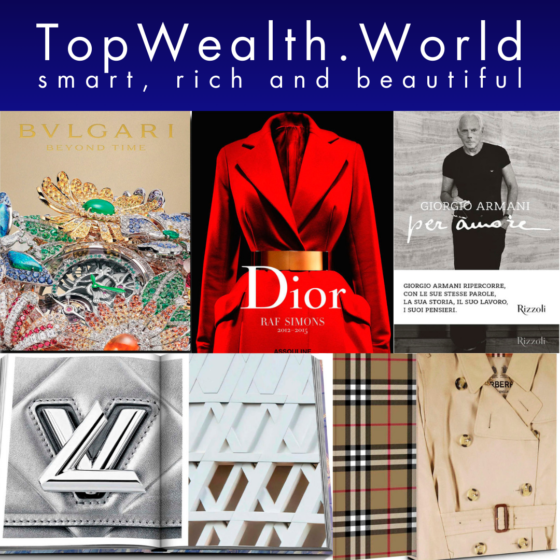
DIOR BY RAF SIMONS

The 344-page volume “Dior by Raf Simons” is the sixth installment in the series dedicated to the creative directors of the French fashion house. The cover features a red coat from the Christian Dior Fall/Winter 2012 Couture collection, which WWD hailed as “one of the most anticipated designer debuts in history.”

In this book, published by Assouline in collaboration with photographer Laziz Hamani and journalist Tim Blanks, unique works by Raf Simons from the period of 2012 to 2015 are presented. The publication celebrates the designer’s strict aesthetics, harmoniously blending with the poetic femininity of Dior.

BURBERRY

The book by fashion critic Alexander Fury, consisting of five chapters and 200 illustrations, describes Burberry’s journey from a family business in 1856 to a global luxury brand in 2022. “Each chapter delves into a series of notable events and symbols that Burberry is renowned for,” according to the house’s press release. “Inspirational explorers, iconic trench coats, and a distinct British identity.”

Many of the images will be immediately recognizable, including those taken during the brand’s most iconic runway shows, while others will allow readers to delve into the history of the house and learn about the creation of its most famous products.

LOUIS VUITTON SKIN: ARCHITECTURE OF LUXURY

The book “Louis Vuitton Skin: Architecture of Luxury,” written by Pulitzer Prize winner Paul Goldberger and published by Assouline in six different covers, invites readers to take a journey around the world by visiting Louis Vuitton boutiques in São Paulo, Seoul, Miami, Mexico, and other cities.

The stores featured in the book are distinctly different from one another, and their exteriors are influenced by local culture and surroundings. For example, the glass façade of the store located in the Ginza shopping district in Tokyo resembles Tokyo Bay with its reflective, undulating surface.

PER AMORE

In 2015, Giorgio Armani released a book with the same title, in which he described his journey from his early life in war-torn Italy to building the Giorgio Armani empire. Building on the success of the first edition, this year, Armani presented a continuation of his illustrated volume.

In this new autobiography, all the attention is devoted to the context of the designer’s personal history. He reflects on his youth and the people close to him, and then recounts the beginnings of his career and what inspires him in the modern world. Armani offers a plethora of wise sayings, philosophically pondering what it means to be “creative” and work in the fashion industry. All of this is accompanied by photographs taken throughout the designer’s life.

SOFIA COPPOLA ARCHIVE: 1999–2023

Sofia Coppola Archive: 1999–2023” offers a behind-the-scenes look at the nearly quarter-century career of one of the most influential contemporary directors, Sofia Coppola. This 488-page book provides a rare glimpse into Coppola’s creative process and includes personal sketches, storyboards, reference collages, annotated scripts, and detailed descriptions of all eight of her films produced to date. The book also features hundreds of previously unpublished photographs, ranging from shots of a 16-year-old Kirsten Dunst on the set of “The Virgin Suicides” to scenes from the actual Paris Hilton house heist by teenagers in “Bling Ring.”

BULGARI: BEYOND TIME

From the distinctive Serpenti model to the revolutionary ultra-thin Octo, watch enthusiasts understand that Bulgari and watchmaking have gone hand in hand for quite some time. The jewelry house’s contribution to the world of horology is reflected in the book “Bulgari: Beyond Time,” dedicated to the unparalleled combination of Italian design and Swiss engineering. Photographs of exceptional timepieces adorned with precious gemstones are accompanied by essays and interviews with representatives of the brand and famous Bulgari enthusiasts.

FASHIONING THE BEATLES: THE LOOKS THAT SHOOK THE WORLD

John, Paul, George, and Ringo weren’t just great musicians; they were true fashion icons. More than fifty years after the breakup of the iconic rock band, the style of its members continues to inspire world-renowned designers, including Tom Browne, John Varvatos, Anna Sui, Stella McCartney, and Alessandro Michele.

Deirdre Kelly’s book, “Fashioning the Beatles: The Looks That Shook The World,” is the first in-depth exploration of the British group’s legacy, demonstrating that their distinctive style was not a random byproduct of their fame but an integral part of their creativity and a key to their global success.

PHARRELL: CARBON, PRESSURE & TIME

In addition to creating collections for Louis Vuitton and producing hit songs, Pharrell Williams also finds time to write books. “Pharrell: Carbon, Pressure & Time: A Book of Jewels” offers a closer look at over 100 jewelry pieces created by Williams, many of which he designed in collaboration with brands like Louis Vuitton, Chanel, and Tiffany & Co. In the book, the musician also engages in discussions with Tyler, the Creator, NIGO, and others about the evolution of jewelry in hip-hop culture and the processes involved in creating custom pieces

GIVENCHY CATWALK: THE COMPLETE COLLECTIONS

The monograph “Givenchy Catwalk: The Complete Collections” offers the opportunity to trace the evolution of the Givenchy house through original runway photographs. The book begins with a brief history of the brand and then delves into the examination of the collections themselves, presented in chronological order. Each new era in Givenchy’s history is accompanied by the biography of the new designer, and individual collections are supplemented with brief text that reveals their influence.

Following editions dedicated to Chanel, Dior, Louis Vuitton, Saint Laurent, Prada, Vivienne Westwood, Versace, and Chloé, this book is the ninth in the series, providing a unique overview of collections from leading global fashion houses.

EUPHORIA FASHION

The TV series “Euphoria,” which first aired on HBO in the summer of 2019, captivated the world with its raw teenage drama and iconic costumes, spawning numerous trends and viral moments. In connection with this, costume designer Heidi Bivens, in collaboration with the entertainment company A24, released a 272-page book titled “Euphoria Fashion,” which provides a detailed account of the creation of the influential wardrobe for the series.

The book begins with an introduction by Jeremy Scott, who designed a special Moschino dress for the character Cassie Howard, portrayed by Sydney Sweeney, in the second season. Within its pages, fans will find interviews with Bivens and renowned “Euphoria” actors such as Zendaya, Hunter Schafer, and Alexa Demie, as well as with the series’ makeup artist Doniella Davy and director Sam Levinson.

Luxury Recession: Diamond Prices Crash, Rolex Downturn Persists

Diamond deflation has arrived with a bang as prices have spent the last year and a half crashing, roundtripping levels not seen since the early days of Covid (and right around the time the federal government started handing out stimmy checks). The crash in prices is yet another indication of a luxury spending bust. Barclays forewarned clients in December that a “luxury recession” was imminent. And luxury watches, like Rolex, have also plunged. 

Diamonds, watches, and other jewelry soared during the pandemic and peaked in the first half of 2022. We have covered the Rolex boom and bust extensively and now turn our attention to diamonds. 

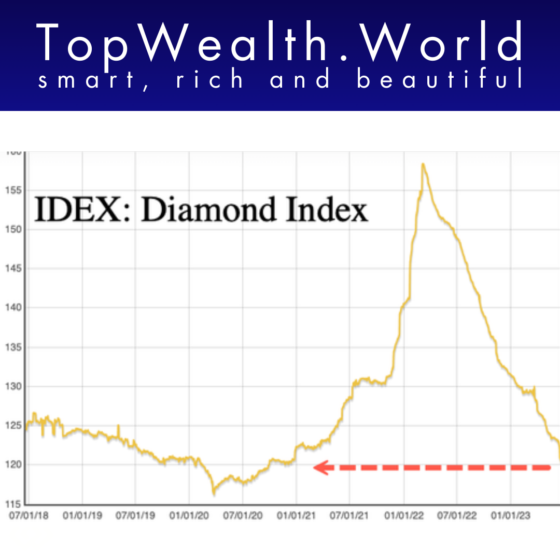
The Diamond Index via International Diamond Exchange (IDEX) soared from a value of 116 in March 2020 to 158 in Mach 2022 or about a 36% upswing. Since the peak, prices have plunged 24%, roundtripping to late summer 2020 levels. 

Paul Zimnisky, the CEO of Paul Zimnisky Diamond Analytics, told CNBC that a 1-carat natural diamond fetching $6,700 a year ago is now selling for around $5,300. 

One of the most likely reasons for diamond deflation is consumers are no longer flushed with government stimulus checks. Also, two years of negative real wage growth, drained personal savings, and mounting credit cards with the highest interest rates in years had dented luxury spending. 

Last month, Deutsche Bank analysts warned clients about the luxury spending bust emerging in the US:

“Slowing to negative growth year-on-year in the US is a building concern, especially given signs of softening demand from more economically sensitive aspirational consumers.” 

Summing up, consumers in retreat are early indications of an economic downturn that might materialize late this year or in the first half of 2024. 

‘It Ain’t Gucci’: LVMH Shares Tumble As Luxury Bubble Unravels 

Reconfirming our thoughts about the deflating luxury bubble is news that luxury conglomerate LVMH reported slowing sales growth, sending shares down 6% and tumbling into a bear market, according to Zerohedge

The French group, controlled by billionaire Bernard Arnault, has faced sliding demand for high-quality products, such as leather goods, perfumes, watches, and wine, in China, Europe, and the US amid a soaring interest rate environment.

LVMH, whose brands include Louis Vuitton, Tiffany & Co., Christian Dior, Fendi, and others, reported sales in the third quarter grew 9% to €19.9 billion, down from +17% in the second quarter, reflecting softer luxury sales worldwide. Sales at the wines and spirits unit plunged 14%, much worse than estimates. The watches and jewelry unit was also under pressure, as well as the fashion and leather goods unit and perfumes and cosmetics. Selective retailing remained robust in the quarter. 

“After three roaring years and outstanding years, growth is converging toward numbers that are more in line with the historical average,” LVMH CFO Jean-Jacques Guiony told investors during a quarterly presentation. 

LVMH shares in Paris stumbled more than 6% on the news. 

“In an uncertain economic and geopolitical environment, the group is confident in its continued growth . . . LVMH is counting on the dynamism of its brands and the talent of its teams to further strengthen its lead in the global luxury market in 2023,” LVMH said.

Citigroup analysts said LVMH’s “limited outlook comment” would be “unhelpful for a sector remaining out of favor and having underperformed in the last six months.” 

Here’s what investors are saying (list courtesy of Bloomberg): 

Swiss Life Gestion Privee

  • “All eyes are now on Hermes which is likely to see some consensus downgrades as it will most likely be affected by a similar foreign exchange impact than the one suffered by LVMH”, said Head of Equities Eric Bleines
  • Hermes reports 3Q sales on Oct. 24 
  • For companies that are exposed to wine and spirits, this confirms that destocking is taking place and one should be careful since it could take a bit longer than expected
  • “The luxury sector is resilient but perhaps this has been overestimated: there remains a cyclical component to it which can’t be ignored”
  • “This is a miss sure but this is not such a big deal; one has to look at the bigger picture, these are not bad figures”

Meeschaert Asset Management

  • One big takeaway is the miss of the wine and spirits division
  • “This does not bode well for companies such as Remy Cointreau or Pernod Ricard,” said Harry Wolhandler, head of equities management
  • Profit warnings are to be expected in the alcoholic beverage sector
  • One positive development is the good sales dynamic in China, the stabilization in the US but there is also some deceleration in Europe
  • Against this backdrop it is better to favor best-in-class stocks with pricing power and profit growth visibility and stay away from restructuring equity stories such as Kering, Wolhandler argued

Banque Eric Sturdza

  • “It’s not that bad really, but in terms or perception, this is their first miss in three years,” said portfolio manager Ludovic Labal
  • The slowdown of European consumers is the main concerning development in the trading update
  • Overall, it confirms that the luxury sector is slowing down but the impact will be less severe for top stocks like LVMH or Hermes than for laggards and stocks perceived as being in the “value” segment of the sector

Palatine Asset Management

  • “I used to say that I liked LVMH because they typically do better than expected but it’s the first time in a while that they disappoint,” said senior portfolio manager Bruno Vacossin
  • The big miss of the trading update is on wine and spirits
  • One has to put today’s share price fall in perspective with the 3% gain made

And comments from big banks:

RBC (outperform)

  • The 2024 outlook remains uncertain and negative earnings revisions are likely not over, analysts led by Piral Dadhania wrote
  • Revenue miss is likely to add further pressure to the broader luxury sector in the near term
  • Key Fashion & Leather division missed expectations for the first time in a number of years
  • Trends are moderating across the board, LVMH management told analysts 
  • Price target lowered to €800 from €810

Barclays (equal-weight)

  • Lower consumption from the European local consumer was the main changing factor
  • CFO didn’t comment on the earnings outlook but said FX would be a headwind for margins
  • Analysts led by Carole Madjo see “risk of earnings pressure in the short term and weaker top-line growth in 2024”
  • Equal-weight rating confirmed

Barclays (equal-weight)

  • Lower consumption from the European local consumer was the main changing factor * CFO didn’t comment on the earnings outlook but said FX would be a headwind for margins * Analysts led by Carole Madjo see “risk of earnings pressure in the short term and weaker top-line growth in 2024”
  • Equal-weight rating confirmed

Morgan Stanley (overweight)

  • “Overall, while today’s miss is not extremely material in magnitude, and market expectations had been lowered in recent weeks, today’s release will nevertheless be taken negatively for LVMH and the broader luxury good sector,” analysts led by Edouard Aubin wrote
  • Four divisions out of five came below expectations with the largest miss coming from Wines & Spirits 
  • All regions decelerated but this was more pronounced in Europe

AlphaValue (add)

  • Softer pace was mainly due to moderated growth in Asia, especially in China and the normalization of both local and tourist demand in Europe
  • “The uncertain macro environment in the Western world and the challenging consumer environment in China have weighed on the demand for luxury goods,” analyst Jie Zhang wrote

LVMH is a bellwether for luxury. And with JPM Markets Desk’s latest warning, “Sentiment is quickly turning very negative across US consumer,” and another from several other banks that show credit card spending unexpectedly cratered in September – this doesn’t bode well for the strong consumer narrative into a US presidential election cycle in 2024. 

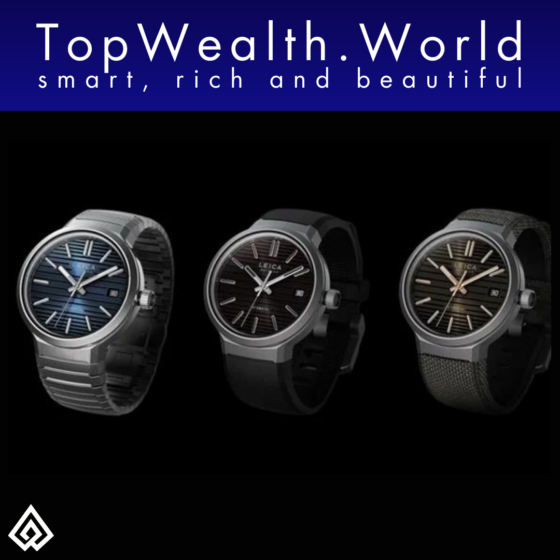
Leica launches ZM 11 series premium mechanical watch starting at $7,120

German camera giant Leica may have carved a niche for itself on the photography turf, but the company has also ventured into other areas relatively unknown including smartphones with the Leica Leitz Phone models, projectors with the Cine 1, and mechanical wristwatches with its existing Z series watches. The company has added its brand logo to a new watch model – the Leica ZM 11 series.

This is coming not too long after the company unveiled a new instant camera that supports printing from smartphones and other Leica cameras. Leica launches ZM 11 series premium mechanical watch starting at $7,120, аs reported by Gizmochina.

Features

The ZM 11 series comes in a double-layer dial design that presents subtle color gradients based on the viewing angle. The time scale is adorned with the Super-Luminova A1 paint which is highly luminous. The hands of the watch are made of diamond-shaped cutting which signposts a beautiful design.

The Leica Caliber LA-3001 movement was jointly developed by Leica and Chronode, a Swiss company. The movement can run at a precise frequency of 28,800 vibrations per hour. It has an accuracy of -4/ +6 seconds per day and is set with 35 gems. The Leica ZM 11 has a power reserve of 60 hours and provides several strap options including rubber, fabric, titanium, and stainless steel.

Price

The ZM 11 series will be released in designated Leica stores globally at the end of November 2023. The prices of the Leica ZM 11 series of watches are priced between €6,800 – €8,150 EUR (~$7,207 – $8,638). It is available in a stainless steel model with rubber or fabric strap options. There is also a titanium alloy version with a pricier titanium alloy strap version. It remains to be seen what kind of reception the new Leica ZM 11 series watch gets from the global audience.

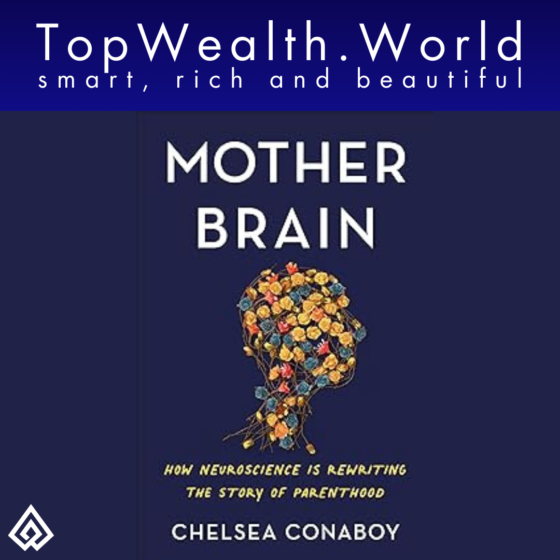
Mother Brain: How Neuroscience Is Rewriting the Story of Parenthood

“Sometimes in the mornings, I would lose my patience, and later, I would cry at the table, reading about how maternal emotional control shapes a system of interneuronal connections in children to regulate their own…”

Journalist and mother Chelsea Conaboy was convinced that motherhood was joy plus fatigue from lack of sleep and a million tasks. But she did not expect the profound changes that occurred within her at the level of thoughts, feelings, and behavior.

“During this period, we as parents are developing just as actively as teenagers during puberty.”

For a long time, the hormonal surge associated with childbirth was seen as something to simply endure. It was believed that parents would return to their former selves afterward. But that’s not the case.

The restructuring of the parental brain is much more than just “rearranging furniture” to make space for another role in the chaos of life. Parenthood moves load-bearing walls.

Here’s what you can read about in the book:

  • How the brain changes and how it continues to change throughout life (spoiler: it’s good, it even rejuvenates!)
  • Where the joy of parenthood is hidden
  • How to stop blaming oneself and accept conflicting feelings “Bad” mothers
  • What changes with the birth of second and subsequent children
  • How to get rid of unrealistic expectations
  • Why worrying is normal
  • How traumas, including miscarriages, affect mental health
  • Myths about maternal behavior, or why caring for offspring is not dependent on gender

Chelsea Conaboy

Chelsea Conaboy is a health and science journalist. She was part of the Boston Globe’s Pulitzer Prize–winning team for coverage of the Boston Marathon bombing. Her work has been published by The New York Times, The Guardian, Mother Jones, Politico, The Week, the Boston Globe Magazine, WBUR, The Philadelphia Inquirer and others. She lives in Maine with her husband, their two children, and her own changing maternal brain.